
Southeast Fairbanks Census Area Genealogy
Southeast Fairbanks Census Area covers a wide stretch of eastern Interior Alaska, taking in communities like Tok, Delta Junction, Eagle, and Northway. The area has no borough seat and no local government structure, which means genealogy research here runs through state-level archives and federal sources rather than a county courthouse. Records go back to the gold rush era along the Yukon River, the construction of the Alaska Highway in 1942, and early Athabascan communities that predate American settlement by centuries. This page covers where to find vital records, court files, land records, and other genealogy sources for this census area.
Southeast Fairbanks Census Area Overview
State Archives Records for Southeast Fairbanks
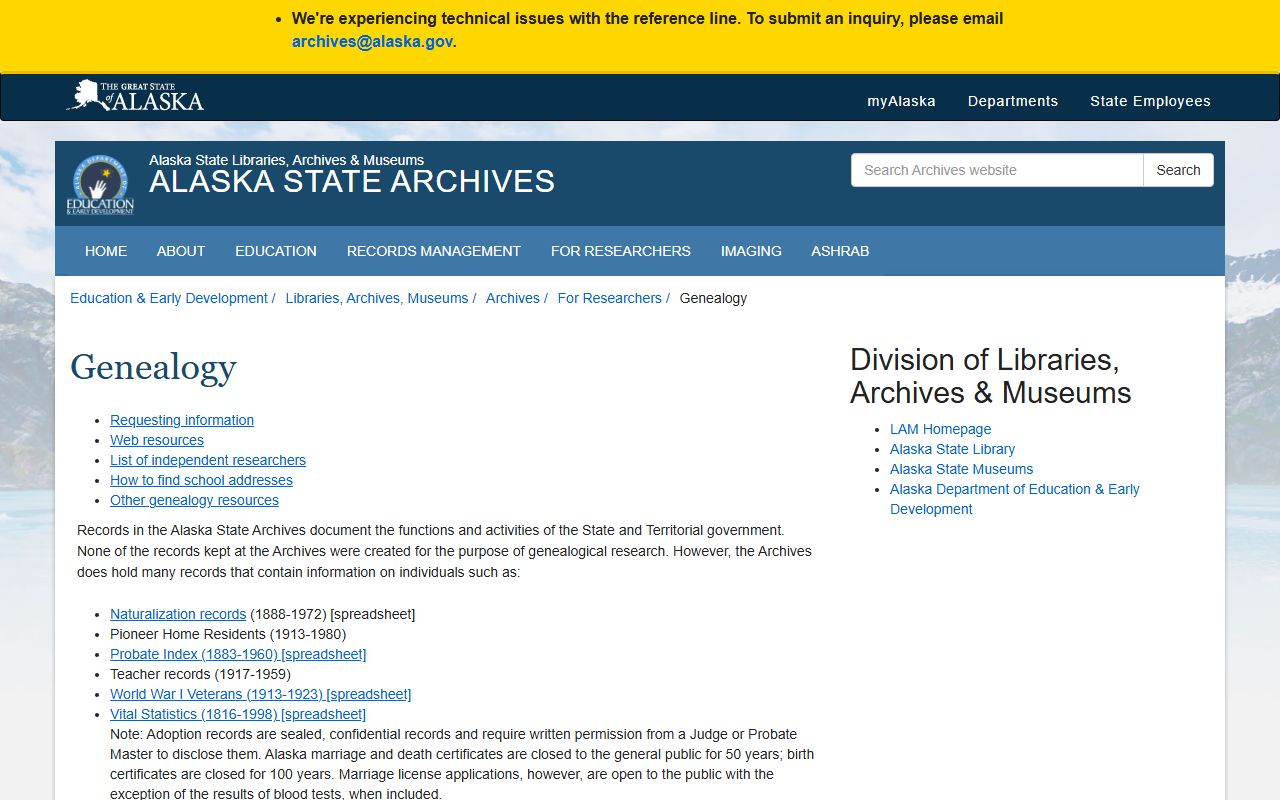
Because this census area has no local borough government, the primary genealogy source is the Alaska State Archives. The archives hold naturalization records from 1888 to 1972, probate records from 1883 to 1960, and vital statistics covering 1816 to 1998. The probate index includes Eagle and Forty Mile precinct estates, both of which fall within or near the Southeast Fairbanks region. Military service discharge records from 1898 to 1934 include veterans from this area. Teacher records from 1917 to 1959 document educators in area schools, which can be useful for tracing families who settled here during the territorial period.
The State Archives research inquiry form is available for specific record requests. If you need records that are not yet digitized, submitting an inquiry is the best path. Staff can confirm what survives and help you get copies.
For vital records after statehood, the Alaska Bureau of Vital Statistics handles births, deaths, marriages, and divorces statewide. Under Alaska Statute 18.50, birth records are restricted for 100 years and death, marriage, and divorce records for 50 years. Records older than those thresholds are open to the public. For this census area, many historical records from the 1900 to 1960 range are now publicly accessible.
Eagle Records: Court, Probate, and Vital Files
Eagle is one of the most important genealogy record locations in Southeast Fairbanks Census Area. The town incorporated as a city in 1901 and served as a supply station for nearby mining districts. Fort Egbert operated near Eagle from 1899 to 1911. That combination of military presence, mining activity, and early incorporation means a solid paper trail survives for Eagle families.
Eagle birth records from 1900 to 1915 are available at FamilySearch. Eagle marriage records from 1913 to 1952 are accessible. Eagle probate records from 1901 to 1950 survive, and Eagle court records from 1900 to 1948 are held at the State Archives. These court records can include civil cases, criminal files, and other proceedings that name local residents.
The Eagle Historical Society maintains resources tied to Eagle's history as a supply station and military post. The society can help with local genealogy questions and may hold materials that supplement what is available through the state archives. Eagle was also connected to the military telegraph line constructed along the Yukon River after the Alaska Purchase, which brought personnel and their families to the area.
Eagle Mining Records and Land Files
The gold rush along the Yukon River in 1884 brought prospectors and miners to what is now Southeast Fairbanks Census Area. Eagle Mining Records from 1898 to 1949 are held at the Alaska State Archives. Eagle Deeds and Water Right Records from 1900 to 1949 are accessible. Eagle Power of Attorney Records from 1900 to 1948 and Eagle Leases from 1901 to 1945 are also on file there.
Forty Mile mining records are another important source. Forty Mile Water Rights Records from 1902 to 1938 and Forty Mile General and Miscellaneous Indexes from 1902 to 1943 survive at the state archives. Forty Mile birth records from 1900 to 1907 are available through FamilySearch. These Forty Mile records cover a community near the border with Yukon, Canada, where many miners worked before the Klondike rush began.
Land records for the Southeast Fairbanks Recording District are searchable through the Alaska DNR land records portal. Deeds, plats, and conveyances for this district cover the modern census area boundaries and can help you trace property ownership through generations.
FamilySearch Collections for Southeast Fairbanks
The FamilySearch wiki page for this census area lists all the key record collections with direct links. In addition to Eagle and Forty Mile records, the wiki covers Fort Yukon birth records from 1890 to 1968, which are useful for families from the northern part of the census area that borders Yukon-Koyukuk. Census records from 1900 to 1940 are available and list household members for communities throughout the region.
The broader FamilySearch Alaska genealogy guide gives a state-level overview of what is digitized and searchable. All FamilySearch resources are free to use at a FamilySearch center or with a free online account.
Alaska Highway Records and World War II Documentation
The Alaska Highway, known as the ALCAN, was built through Southeast Fairbanks Census Area in 1942. Construction brought thousands of military personnel and civilian workers to the region. If your ancestor served in the Army Corps of Engineers or worked as a civilian contractor on the highway project, records may exist in federal military archives. The National Archives Pacific Alaska Region in Seattle holds federal records for Alaska, including military and civilian files from the World War II era.
The Alaska Highway corridor brought new communities to this area and changed the population significantly. Delta Junction, Tok, and Northway all grew in connection with the highway. Birth and death records from these communities after 1942 are held by the Alaska Bureau of Vital Statistics.
Alaska State Library and Digital Archives
The Alaska State Library in Juneau holds genealogy resources covering the Interior Alaska region. The library's collections include historical directories, newspapers, and reference materials that can help identify ancestors who lived in the Southeast Fairbanks area during the territorial period.
Alaska's Digital Archives holds photographs and historical documents, including materials from Interior Alaska communities. The Alaska Historical Society also maintains genealogy references for the state. For hard-to-find individuals, Lost Alaskans is a good resource for death inquiries and missing persons from Alaska's history.
Athabascan Heritage and Tribal Records
Southeast Fairbanks Census Area includes communities with long Athabascan histories, including Northway, Tanacross, and Dot Lake. For families with Athabascan roots, tribal enrollment records and cultural preservation programs may hold genealogical information not available in state or federal archives. The communities in this region are connected to the broader Interior Alaska tribal network that Tanana Chiefs Conference in Fairbanks represents.
Alaska village census rolls from 1919 to 1972 at FamilySearch are especially important for interior Alaska communities. These rolls recorded residents of Native villages and can be a key source for families not well captured by standard civil registration.
Nearby Boroughs
Research for Southeast Fairbanks families often overlaps with records held in neighboring areas. Many families in this region moved between these jurisdictions during the mining and highway eras.