
Access Yukon-Koyukuk Census Area Genealogy Records
Yukon-Koyukuk Census Area is the largest census area in the United States by land area, covering a vast stretch of Interior Alaska along the Yukon and Koyukuk rivers. The region has no borough seat and no local government structure beyond school districts and tribal governments, which means genealogy research here runs through tribal sources, state archives, and federal collections rather than a local courthouse. Athabascan communities have lived along these rivers for thousands of years, and Russian Orthodox mission records, federal village census rolls, and state archives together form the main documentation for families from this area. This page explains where to search.
Yukon-Koyukuk Census Area Overview
State Archives Records for Yukon-Koyukuk
Because this census area has no local borough government, all archived records flow through state and federal sources. The Alaska State Archives holds naturalization records from 1888 to 1972 that cover Yukon-Koyukuk area residents. The probate index from 1883 to 1960 includes Yukon-Koyukuk cases. Vital statistics at the state level cover 1816 to 1998, including births, marriages, and deaths from communities throughout this census area. Military discharge records from 1898 to 1934 include veterans from this region. Teacher records from 1917 to 1959 document educators in area schools, which can help trace families who settled in remote communities.
The Alaska State Archives research inquiry form is available for specific record requests. Staff can confirm what survives and help you get copies. Many records from this area have not been fully digitized, so an inquiry is often the best first step for pre-1960 materials.
Current vital records go through the Alaska Bureau of Vital Statistics. Under Alaska Statute 18.50, births are restricted for 100 years and deaths, marriages, and divorces for 50 years. Records older than those windows are open to the public.
FamilySearch Collections for Yukon-Koyukuk
The FamilySearch wiki page for this census area is the best single resource for identifying what is digitized and searchable. Fort Yukon birth records from 1890 to 1968 are available and cover one of the most populated communities in the region. Nenana birth, marriage, and death records from 1916 to 1984 are accessible. Rampart Precinct birth records from 1909 to 1915 are available. Wiseman birth records from 1913 to 1947 are accessible. These community-level collections are scattered but together provide coverage across the census area.
Marriage records are available for several precincts. Circle Precinct marriage records from 1913 to 1952 are accessible, though Circle is near the boundary with Southeast Fairbanks Census Area. Fort Yukon marriage records from 1924 to 1959 are available. Nulato Precinct marriage records from 1917 to 1983 cover one of the longer-running records sets for any single community in the region. Census records from 1900 to 1940 are accessible for communities throughout the census area. These federal censuses list household members by name, age, birthplace, and relationship and are often the easiest starting point for a new family search.
Alaska Village Census Rolls for Interior Communities
Alaska village census rolls from 1919 to 1972 at FamilySearch are especially important for Yukon-Koyukuk genealogy. These rolls were taken at the village level and recorded residents of Native communities. For Athabascan families in Fort Yukon, Galena, Hughes, Huslia, Kaltag, Nulato, Ruby, Tanana, and other communities throughout this census area, these rolls may hold names, ages, and family relationships that do not appear in standard civil records. The rolls were taken roughly every decade and show how families changed over time.
Federal Indian census records from the late 1800s and early 1900s are another important source for this region. These predate the Alaska village census roll system and can identify families from the earliest documented period in Interior Alaska. Both sets are free to search through FamilySearch.
AKGenWeb Yukon-Koyukuk Resources
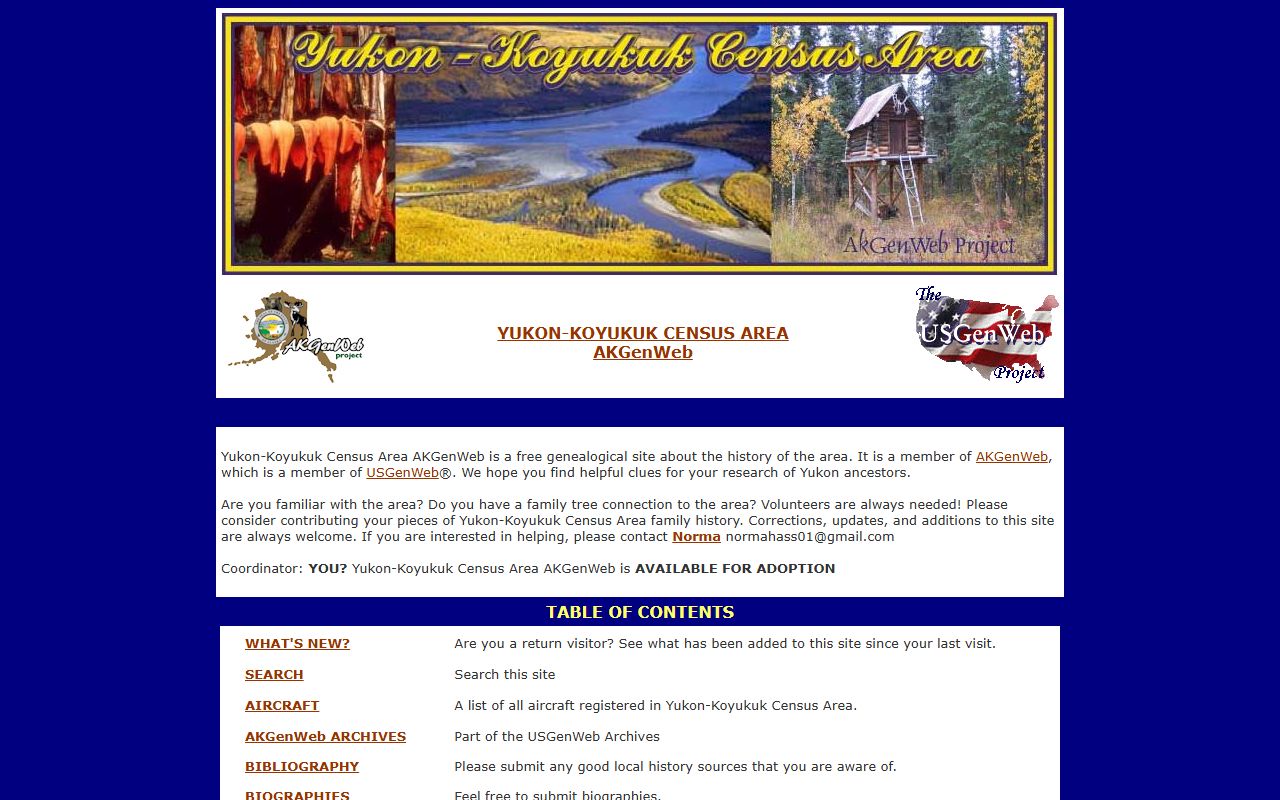
The AKGenWeb Yukon-Koyukuk page is a volunteer-maintained site with transcribed records and indexes for this region. Births listed A through Z are available from FamilySearch index records. Deaths from the Social Security Death Index with last residence in the area are compiled. Marriages from 1900 to 1950 are available. Telephone directories give another angle on who lived in these communities at a given time. The 1915 to 1916 Alaska-Yukon Gazetteer and Business Directory and the 1923 to 1924 edition are both accessible. A 1984 telephone directory covers multiple communities: Allakaket, Fort Yukon, Galena, Hughes, Huslia, Kaltag, Nulato, Ruby, and Tanana.
Aircraft and boat registration lists are available for the census area. In Interior Alaska, small planes and riverboats were essential transportation, and registration records can help confirm that an ancestor was based in a specific community during a given period. Cemetery information is requested from volunteers on the site, and the Nenana Cemetery is available as a four-page PDF listing burials.
Russian Orthodox Church Records for Yukon River Communities
Russian Orthodox missions spread through Interior Alaska along the Yukon and Koyukuk rivers in the mid-1800s, and many Athabascan communities converted during this period. The church kept parish registers recording baptisms, marriages, and burials. These records predate Alaska statehood and often predate the federal census system in these villages. For families with connections to Nulato, Holy Cross, Anvik, Russian Mission, or other mission-era communities, Orthodox church records may be the earliest documentation you can find.
Russian Orthodox Parish Registers for Alaska are available in part through FamilySearch, including digitized images covering multiple Interior communities. The dates and completeness vary by location. Some registers have gaps due to the isolation of these communities and the challenges of maintaining records in remote areas. But where they survive, they are detailed and often list family relationships clearly.
Tanana Chiefs Conference and Tribal Resources
The Tanana Chiefs Conference serves 42 tribes in Interior Alaska including communities throughout Yukon-Koyukuk Census Area. The conference provides services related to tribal enrollment and family history. Cultural preservation programs support Athabascan heritage across the region. Resources are available for tribal members researching family genealogy. If you have Athabascan ancestry from this area, contacting Tanana Chiefs Conference is an important step. The organization can help connect you with tribal enrollment records, cultural resources, and community-specific documentation that state and federal archives do not hold.
Individual tribes within the census area also maintain their own enrollment records and may hold oral histories, clan documentation, and family records specific to their community. Reaching out to the village tribal council directly can open sources that are not accessible through any centralized archive.
Alaska State Library and Online Research Tools
The Alaska State Library in Juneau holds genealogy resources for Interior Alaska. The library's collections include historical directories and newspapers that can help identify ancestors living in the Yukon-Koyukuk region during the territorial period. Some newspapers from Fairbanks covered communities throughout Interior Alaska and may carry birth announcements, obituaries, and other family news from Yukon-Koyukuk area residents.
Alaska's Digital Archives holds historical photographs and documents, including materials from Interior Alaska communities. The Alaska Historical Society maintains genealogy references for the state. The National Archives in Seattle holds federal records for Alaska, including homestead applications and Bureau of Indian Affairs records that are important for Interior Alaska communities. Land records for the various recording districts within this census area are searchable through the Alaska DNR land records portal. For death inquiries tied to Alaska's history, Lost Alaskans is a useful resource.
Research Tips for Yukon-Koyukuk Records
Researching this census area takes patience. Records are scattered across multiple agencies, communities in this region were often missed or recorded inconsistently in early civil records, and many materials have not been digitized. Start with FamilySearch to see what is available online. Then check the Alaska State Archives research inquiry process for records not yet online.
Tribal sources are not optional here. For anyone with Athabascan ancestry from this area, tribal enrollment records and oral histories may be the only documentation for generations prior to the 1900s. Tanana Chiefs Conference and individual village tribal councils are your best contacts for those sources.
Nearby Boroughs
Given the size of Yukon-Koyukuk Census Area, families from different parts of the region may have connections to more than one neighboring jurisdiction. Fairbanks was the main urban center for much of Interior Alaska and many Yukon-Koyukuk area families have records filed there.