
Find Nome Census Area Genealogy Records
Genealogy research in Nome Census Area takes you into one of the most historically dramatic regions in all of Alaska, a place where gold discovery in 1898 drew over 20,000 prospectors within two years, where Inupiaq and Yupik families had lived for centuries before, and where the resulting blend of populations created a record trail that spans Russian Orthodox parish registers, federal mining court files, Methodist church records, and state vital statistics going back to the early 1900s. Researchers will find digitized collections at FamilySearch, specialized holdings at the Carrie M. McLain Memorial Museum, and guidance through the AKGenWeb Nome resource page.
Nome Census Area Overview
Gold Rush Records and Nome Census Area History
Nome's genealogy story starts with gold. On April 23, 1898, three prospectors known as the "Three Lucky Swedes" - John Brynteson, Jafet Lindeberg, and E.O. Lindblom - found placer gold at Anvil Creek. Two Inupiaq young men, Constantine Uparazuck and Gabriel Adams, had shown the prospectors where to look. Within two years, more than 20,000 people had come to Nome, then called Anvil City, making it home to roughly one-third of all white residents in Alaska at the time.
That rush generated enormous record-keeping. Mining claims had to be filed. Disputes went to court. Deaths were registered. The federal government set up administrative structures almost overnight, and the paper trail from those early years is surprisingly rich. Nome's records from 1899 to 1910 document the peak of the gold rush population and can help researchers trace ancestors who came to Alaska during this period, many of whom later settled elsewhere in the state or returned to the lower 48.
Historical census figures for Nome Census Area show the region's changing population: 6,091 in 1960, 5,749 in 1970, 6,537 in 1980, 8,288 in 1990, 9,196 in 2000, and 9,492 in 2010. Population stability over recent decades reflects the area's transition from a gold rush boomtown to a regional hub for western Alaska communities.
Nome Vital Records: Births, Deaths, and Marriages
The Alaska State Archives holds several key vital record collections for Nome Census Area. These collections were created under territorial administration and cover communities throughout the Seward Peninsula.
Nome Marriage Records span 1813 to 1957. The early dates reflect Russian Orthodox parish records from St. Michael that were incorporated into the Nome administrative record system. Nome Death Records run 1813 to 1959, again beginning with Russian-era parish documentation. Nome Divorce Records cover 1946 to 1956. Cape Nome Mining Records 1899 to 1940 document the mining claims and related transactions that drove the region's economy for four decades.
For Nome specifically, the Archives also holds Nome Naturalization Records from 1907 to 1934. Naturalization records are especially valuable for genealogy because they typically include the applicant's country of origin, date and port of arrival in the United States, and information about their household. Many Nome-area immigrants came from Scandinavia, Russia, or eastern Europe, and naturalization files can bridge the gap between U.S. records and foreign archives.
Under Alaska Statute 18.50.290, birth records under 100 years old are restricted. Death, marriage, and divorce records under 50 years old are also restricted per AS 18.50.300. For recent certified copies, the Alaska Division of Public Health Vital Records Office handles all statewide requests.
Russian Orthodox and Church Records for Nome Area
Russian Orthodox Parish Registers from St. Michael, covering 1894 to 1904, are among the oldest formal records for the Nome region. St. Michael was the main Russian Orthodox administrative center for western Alaska, and its registers document baptisms, marriages, and burials for Inupiaq and mixed-heritage families across a wide area including what is now Nome Census Area. These records are particularly important for Alaska Native genealogy because they were often the only formal registration of vital events before U.S. territorial administration reached these communities.
Nome Methodist Church Records from 1915 to 1961 cover a later period. Methodist missions were active in Nome and surrounding communities from the early 1900s, and church registers can document families not captured in civil vital records. Comparing church records with civil records sometimes turns up different name spellings or additional family members. The Alaska State Archives genealogy portal can help you locate these collections.
Council City Guardianship Records from 1904 to 1914 document legal guardianships established in the Council City area, a community near Nome that thrived during the gold rush and declined afterward. These records can help trace families with connections to smaller Nome-area communities.
Carrie M. McLain Memorial Museum and Court Records
In 2005, the Alaska State Archives and the City of Nome made a significant decision: they placed over 1,000 volumes of court records at the Carrie M. McLain Memorial Museum in Nome. These volumes document land ownership, mining claims, estate proceedings, and other legal matters from the gold rush era onward. Having these records in Nome rather than Juneau makes them more accessible to Seward Peninsula researchers and to Nome-area families who may not be able to travel to the state capital.
The collection covers the range of civil matters that came before Nome courts during the busiest years of the gold rush and the quieter decades that followed. Mining claim records are particularly useful because they name claimants, record transfer of ownership, and sometimes include personal details about the individuals involved. Estate records similarly name heirs and beneficiaries, providing a window into family structures that might not appear in vital records alone.
St. Michael Probate Records from 1894 to 1949 are another significant collection. St. Michael, located at the mouth of the Yukon River, served as the main port of entry for Nome-area gold rush traffic and the administrative center for western Alaska. Its probate files document the estates of people who died in the region across five decades, including the gold rush years and the quieter period that followed.
AKGenWeb Nome and FamilySearch Collections
The AKGenWeb Nome Census Area page is a volunteer-maintained genealogy resource that provides indexes, transcriptions, and links to records for the region. AKGenWeb projects are free to use and often contain locally compiled data not available elsewhere, including cemetery transcriptions, family files submitted by researchers, and indexes to local newspapers.
The AKGenWeb Nome Census Area site offers free genealogy indexes and records for the Nome region, compiled by volunteer researchers with deep knowledge of local history and archives.
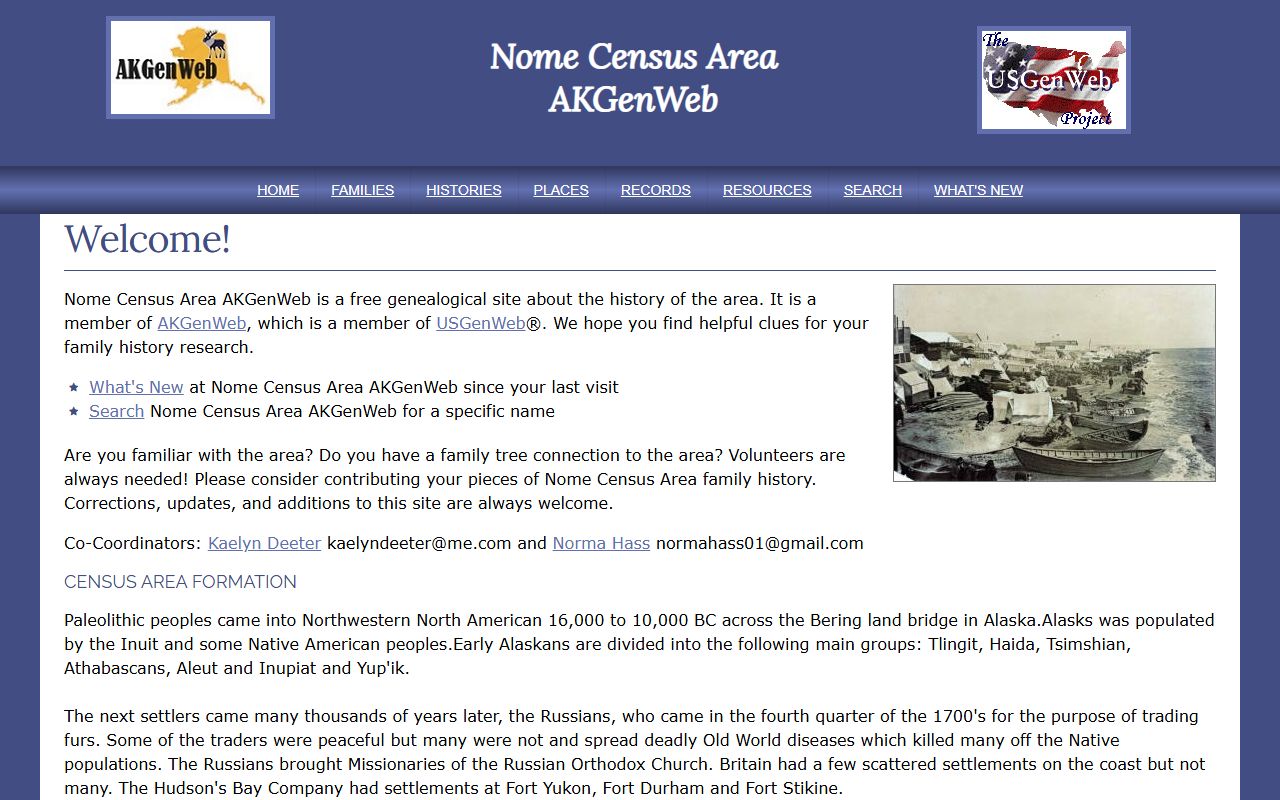
The FamilySearch Nome Census Area genealogy guide lists digitized records available as free images. Alaska Village Census Rolls from 1919 to 1972 are available through FamilySearch and are a key resource for Native Alaskan families in Nome Census Area. These rolls documented the populations of Alaska Native villages at regular intervals and can trace families across generations. WWII Draft Registration Cards from 1940 to 1945 on FamilySearch can confirm the presence of Nome-area men during the war years.
The Alaska State Library genealogy guide provides additional leads on Nome-area newspaper collections and secondary sources. The VILDA Alaska digital archive holds photographs and some documentary materials from Nome that can supplement formal records with visual context.
Bering Land Bridge and Environmental Context Records
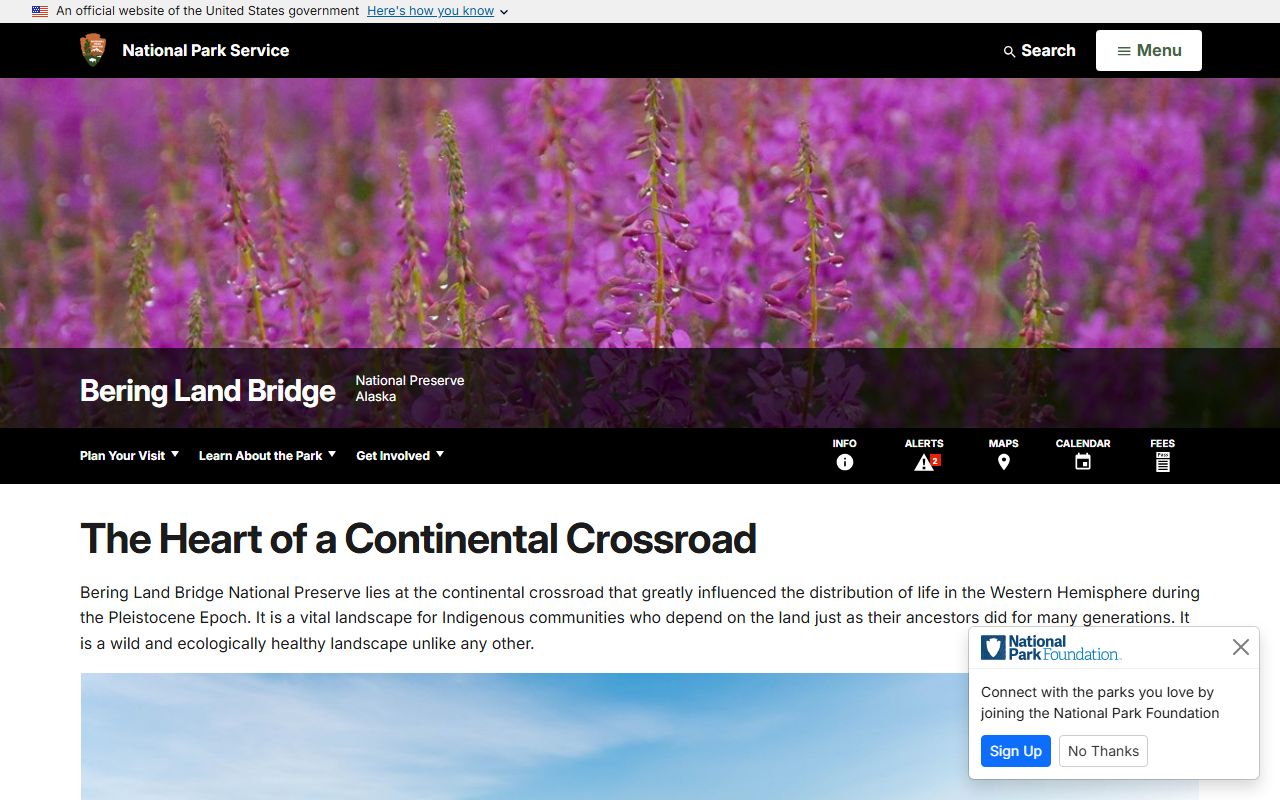
The Seward Peninsula's geography shaped its history and its records. The Bering Land Bridge National Preserve covers much of the region, and the National Park Service holds interpretive and archival materials related to the area's long human history.
The Bering Land Bridge National Preserve covers much of the Seward Peninsula and holds materials related to the region's Indigenous history and early exploration, providing context for genealogy research in Nome Census Area.
For Native Alaskan family research specifically, the Alaska Historical Society genealogy resources page lists organizations and collections that focus on Alaska Native family history. ANCSA corporation records, tribal enrollment records, and BIA administrative files can all provide genealogical data for Inupiaq and Yupik families in the Nome region. The National Archives at Seattle holds Bureau of Indian Affairs records for Alaska, which can be rich sources for Native Alaskan genealogy research predating statehood.
Nearby Census Area Genealogy Resources
Nome Census Area shares the western Alaska region with several neighboring jurisdictions. Families often moved between these areas, and records in neighboring areas may document Nome residents at different stages of their lives.
Yukon-Koyukuk Census Area to the east covers the vast interior of western Alaska, including communities along the Yukon River that had regular contact with Nome during the gold rush era. Many prospectors who came to Nome traveled through or from Yukon River communities. Northwest Arctic Borough to the north covers the Kotzebue Sound area, another region with close connections to Nome through trade and family ties. Kusilvak Census Area to the south covers the Yukon-Kuskokwim Delta, with records that may intersect with Nome-area families who had connections to Yupik communities.